Congress defeated Southern resistance to the Voting Rights Act once; it can do it again

A few weeks ago, the U.S. Supreme Court effectively eliminated the Voting Rights Act of 1965 (VRA) as a check on racial gerrymandering. State legislators have seized on the ruling to disenfranchise Black voters throughout the South, wiping out some districts that have long included Black majorities, cancelling elections, and throwing out votes in their rush to resurrect Jim Crow.
It won’t be the first time Southern legislatures have done this. For decades after 1965, racist lawmakers continued to manipulate congressional districts to silence Black voters. When the U.S. Supreme Court failed to stop them, Congress enacted the provision of the VRA that the Court just destroyed.
Get updates straight to your inbox — for free
Join 350,000 readers who rely on our daily and weekly newsletters for the latest in voting, elections and democracy.
Voters today must demand representatives who will once again restore voting rights and rein in an antidemocratic Court. The Callais ruling has taken the country at least as far back as the pre-1982 version of the VRA, before Congress responded to Southern defiance by strengthening the civil rights law. And history shows that it will once again take congressional action to truly ensure fair elections in the South.
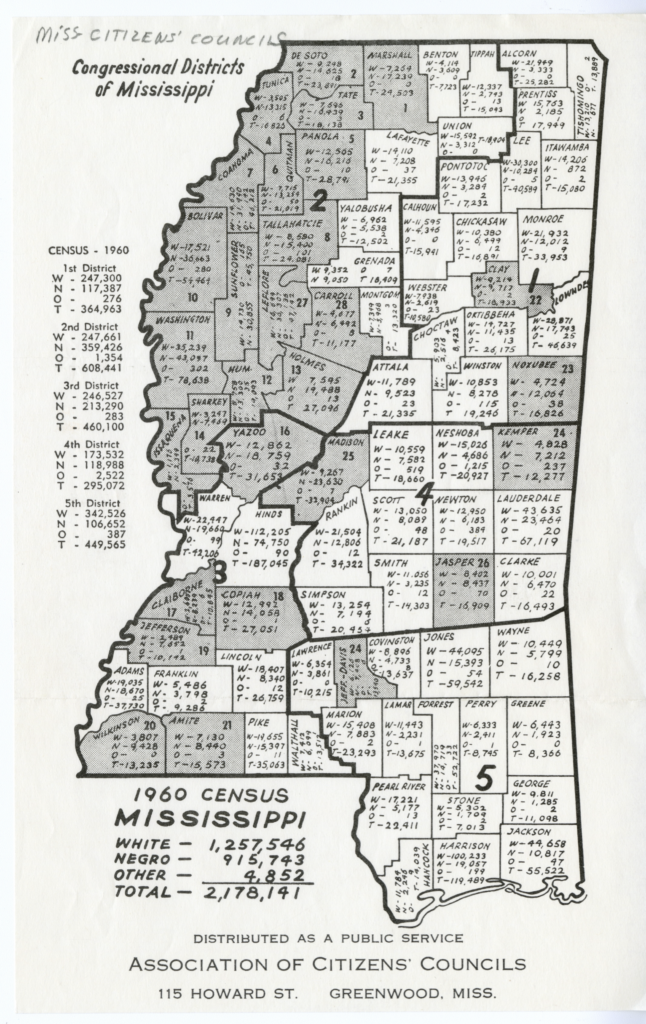
Southern states responded to the VRA with “massive resistance,” which included voter suppression and new congressional maps that carved up
majority-Black communities. Mississippi actually had a majority-Black congressional district before the VRA was enacted, though the state had successfully kept Black people from registering to vote. As Black voter registration shot up, the state split up the majority-Black district and combined it with majority-white counties in the eastern part of the state.
These districts disenfranchised Black voters in Mississippi for more than a decade. And geographically speaking, those districts are probably not that different from what Republicans today have in mind. Mississippi Gov. Tate Reeves recently vowed that a long-serving Black representative’s “reign of terror” was over. He said they would carve up the district after the midterm elections.
Last time this happened, it took an 18-year-long legal battle and amendments to the VRA to actually force Southern states to draw the majority-Black districts that Republicans are eliminating. In the 1980 Mobile v. Borden case, the U.S. Supreme Court overturned a Fifth Circuit ruling that elections for the Mobile City Commission violated the VRA. The justices ruled that voters had to prove intentional discrimination, not just a discriminatory impact, in VRA cases.
Congress jumped into action and overturned this decision with the 1982 amendments to the VRA, which explicitly banned election rules and districts that impact voters of color more than others.
It took years of litigation to actually get some Southern states to comply with the 1982 amendments. But by the time districts were redrawn after the 1990 Census, states couldn’t get around the VRA. They finally had to comply.
North Carolina had its first congressional election with a majority-Black district in 1992, but the Black population was later reduced, as voting became less racially polarized. Last year, Republicans carved up this district, reportedly at the behest of Trump, and left it with a Black voting-age population of less than one-third.
Throughout the 1970s, the percentage of non-white members of Congress remained in the low single digits. That may be where we’re headed again, as Southern legislatures gerrymander the region where most of the country’s Black population lives.
Activists and Democratic lawmakers across the country are trying to fight back. Blue states could respond with their own new maps to counter the GOP’s gerrymandering.
But there’s also a path to fair congressional districts before the 2030 Census requires new districts. This path runs through Congress and state courts. Voters can push for more civil rights lawyers to be elected or appointed to state courts, which have the power to fight the disenfranchisement that the U.S. Supreme Court and Republican legislators have unleashed. In North Carolina, Justices Anita Earls and Allison Riggs had both successfully defeated politicians in gerrymandering cases before they reached the bench.
Voters can also elect a president and members of Congress willing to rein in an out-of-control and antidemocratic U.S. Supreme Court. Congress has the power to enact a new VRA, and it can use its authority to define the Court’s jurisdiction to keep the justices from undermining the rights of Black voters.
In 1982, Congress thought that changing the VRA was enough. But it wasn’t enough for this Court, under the leadership of a longtime VRA opponent. That’s why Congress has to pass a new VRA and strip the justices of any power over it.
Billy Corriher is the state courts manager for People’s Parity Project Action and the author of Justice for the People: The Anita Earls Story. As a Democracy Docket contributor, Billy writes about voting and election state court cases in North Carolina and across the country.