In blow to Trump, South Carolina lawmakers drop bid to pass gerrymander for midterms
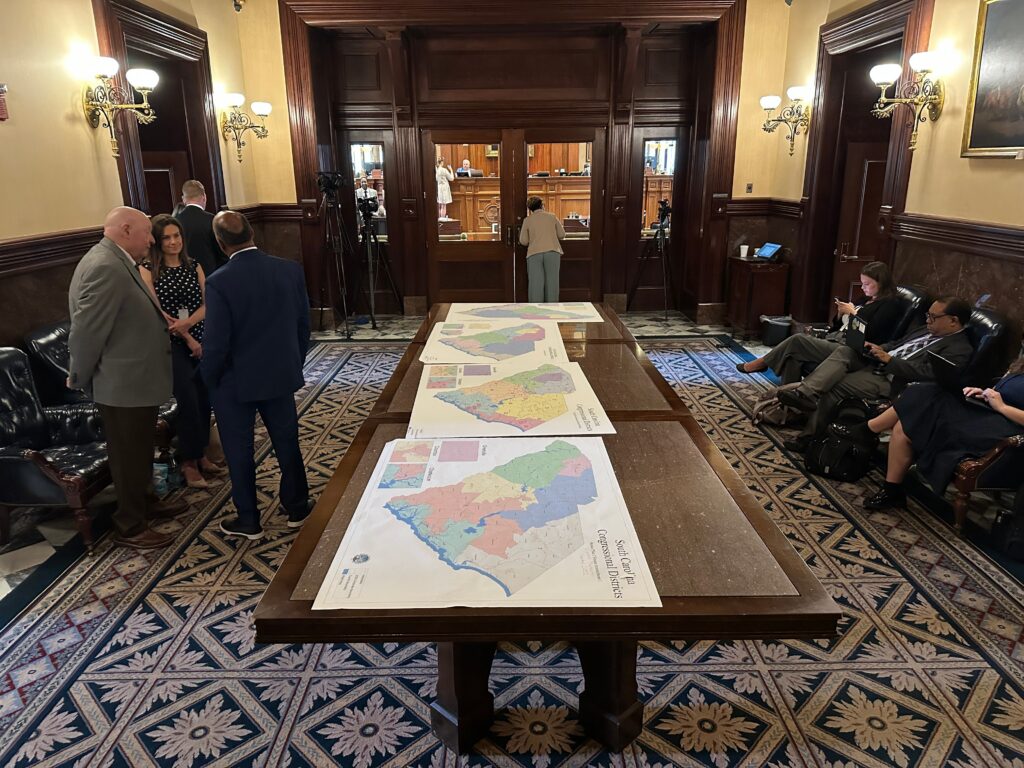
The South Carolina Senate abruptly adjourned its special redistricting session Tuesday without passing a redistricting bill — a setback for President Donald Trump’s campaign to rig the 2026 midterms.
With the state legislature now in recess until June 10, the Republican effort to redraw the state’s congressional map to dismantle the state’s lone majority-Black district in time for the midterm elections is all but dead.
The move came after a tumultuous few weeks in the state legislature, where the GOP majority — under pressure from Trump — quickly tried to pass a gerrymandered map ahead of the midterms, after the Supreme Court gutted key Voting Rights Act protections that had long shielded Black voting power from racial gerrymandering.
Get updates straight to your inbox — for free
Join 350,000 readers who rely on our daily and weekly newsletters for the latest in voting, elections and democracy.
The move is also strong rebuke of Trump’s efforts to pressure southern states to pass new gerrymandered maps to give the GOP more favorable odds of holding on to the U.S. House of Representatives in the midterms. South Carolina is the first state to fail in passing a new map in Trump’s gerrymander war since the Supreme Court’s Callais decision came down in late April.
“Today, democracy won in South Carolina,” NAACP General Counsel Kristen Clarke said in a statement. “By shutting down this late decade redistricting attempts, the voices of voters will prevail. This decision not only protects our communities but ensures power remains with the people.”
Jace Woodrum, executive director of the ACLU of South Carolina, praised the hundreds of South Carolina residents who testified against redistricting over the course of the special session.
“There are powerful people who want you to believe that showing up doesn’t matter,” Woodrum said in a statement. “We the people still hold the power, and representative democracy is still standing. After we made our voices heard, lawmakers from both political parties finally saw that the rush to redistrict hurts voters — and they did the right thing.”
Tuesday’s vote to abandon redistricting happened on the first day of early voting for the state’s June 9 primary election. By 1 p.m., more than 32,000 people cast their ballots — a single-day record for a primary election in the state, according to the South Carolina Election Commission (SCEC) — and some senators took to the floor to proclaim they ran out of time to pass a redistricting bill.
“South Carolina citizens are going to the polls today,” Sen. Richard Cash (R) said on the Senate floor. “And neither my conscience nor my common sense is going to let me stop an election that is already underway.”
Senators voted 26-18 to adjourn the special session after a last-ditch cloture vote — a vote to end debate on redistricting and set up a vote on the new map as soon as Wednesday — failed.
“I believe this is our last and best chance to pass this map,” Sen. Larry Grooms (R) said before the vote. “And without cloture, it’s not going to happen.”
Lawmakers took up redistricting earlier this month at the urging of Trump and the White House, who hired Adam Kincaid— the GOP’s go-to guy to draw new partisan gerrymanders — to redraw congressional districts to wipe out the state’s lone Democratic district, long held by Rep. Jim Clyburn.
Initially, it didn’t seem like South Carolina lawmakers would heed Trump’s call to pass a new map. On the last day of the state legislature’s regular session, the Senate voted down a measure to bring lawmakers back. But South Carolina Gov. Henry McMaster (R) immediately called the legislature back to take up redistricting — despite previously saying he wouldn’t.
For nearly two weeks, lawmakers in both the House and Senate heard testimony from hundreds of South Carolina residents and debated the many problems of a rushed redistricting process.
The most contentious one was the abridged timeline to pull off such a feat. The legislature set a self-imposed deadline to pass a redistricting bill before early voting kicked off. A provision of the measure would decouple the state’s congressional primary from other elections and delay it to August.
SCEC Executive Director Conway Belangia testified before a Senate committee last week that such a plan would be “a monumental task” for the SCEC to pull off. “Lots of man hours… Any blip causes a huge problem,” he said.
And it would have been expensive. Belangia estimated that pushing the primary back to August would’ve cost the election commission between $5.3 and $6 million in emergency funding.
Democratic lawmakers repeatedly slammed their GOP colleagues for rushing through the redistricting process — which usually takes months — in just a matter of days, just to please Trump.
“You should be ashamed of yourselves,” Rep. Heather Bauer (D) said to her Republican colleagues during a House debate last week. “The ease of which you bend the knee to your lord and savior Donald Trump, I just don’t understand… it’s not fair to South Carolinians.”
But some Republican lawmakers were hesitant to take up redistricting, citing the rushed timeline, the lack of input from South Carolinians on the process, and concerns that the new map could backfire by creating more competitive districts for Democrats.
“This is going to motivate Black [voter] turnout,” Sen. Majority Leader Shane Massey (R) said during a previous redistricting debate. “And there will be repercussions for that. There will be Republican losses because of this.”