This week at Democracy Docket: Election denialism is alive and well in Georgia and Pennsylvania — while Trump’s DOJ continues to stumble
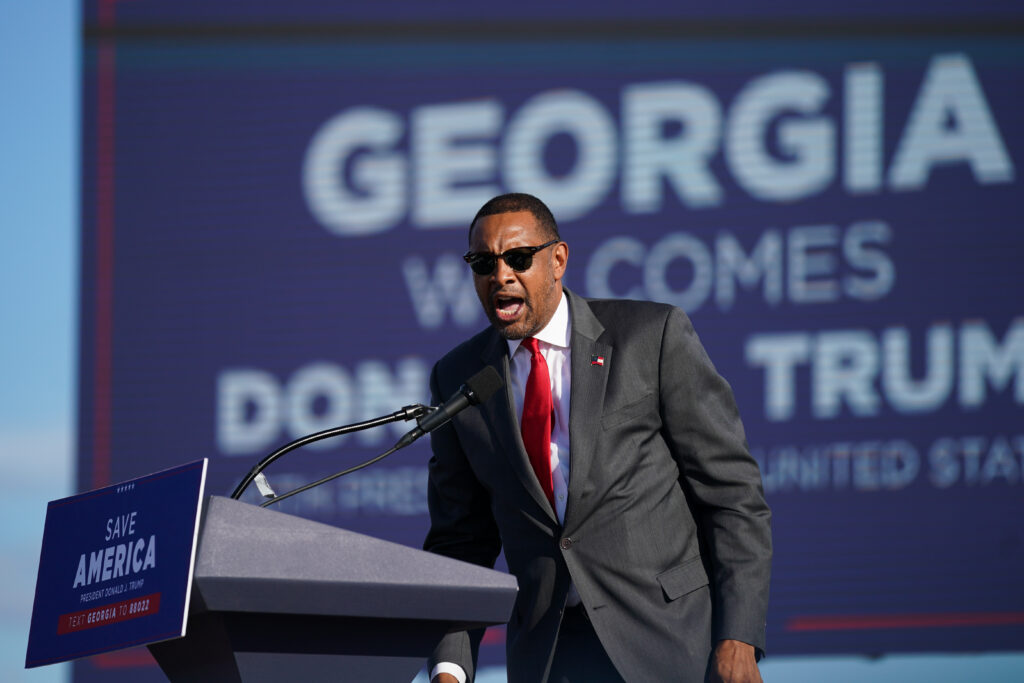
If you thought President Donald Trump’s deep unpopularity might be moving GOP voters away from election denialism, this week suggested you should think again.
Democracy Docket brought you in-depth coverage of Georgia’s primaries — led by reporter Brentin Mock, on the ground in Atlanta. He reported that two GOP governor candidates who have cast doubt on the 2020 election results, former state lawmaker Vernon Jones and businessman Rick Jackson, advanced to a runoff, beating Secretary of State Brad Raffensperger, who famously resisted Trump’s pressure to help him steal 2020.
Get updates straight to your inbox — for free
Join 350,000 readers who rely on our daily and weekly newsletters for the latest in voting, elections and democracy.
It was a similar story in the race to replace Raffensperger as the state’s top election official. Two candidates who ran on voter suppression platforms — “I stand with those who believe there was election fraud” in 2020, one has said — defeated Raffensperger’s top deputy.
Meanwhile, two Democratic-backed candidates for the state’s supreme court lost to conservative incumbents. The results dashed Democrats’ hopes of bolstering their representation on a court that could hear crucial voting or redistricting cases affecting upcoming elections.
And, as Jacob Knutson reported, MAGA Republicans cynically seized on a delay reporting results from Fulton County — caused by the temporary closure of a polling place after a report of a suspicious person — to falsely stoke fears about fraud. The episode, one GOP lawmaker said, offered the latest evidence that voting in Fulton — the state’s largest county and a Democratic stronghold — should be brought under the control of the state.
Pennsylvania also held its primaries Tuesday. As Brentin explained, the new GOP nominee for governor — she was running unopposed — has also made clear she doesn’t accept the results of 2020. “We know that [Trump] won,” Stacy Garrity told a crowd at a 2022 rally — though she has since tried to walk it back.
We also continued to stay on top of Southern states’ rush to wipe out Black representation in Congress. As Matt Cohen and Jim Knutson reported, South Carolina and Louisiana both advanced measures this week to do that — though things are still uncertain in the Palmetto State, where Republicans aren’t unified around the plan and time is tight.
But Democrats are fighting back. As Jen Rice reported, House Minority Leader Hakeem Jeffries confirmed that the party will look to counter the GOP’s gerrymandering ahead of 2028, and named the seven blue states where he’s hoping for pro-Democratic redraws.
And it was another bad week for the Trump administration’s bid to take control of voting.
As Jim Saksa and legal researcher Maya Bodinson reported, federal courts ruled against the Department of Justice in separate lawsuits aimed at obtaining voter rolls from Maine and Wisconsin — bringing DOJ’s record in voter rolls cases to an abysmal 0-8.
And things don’t seem to be going great for the department in its California and Oregon cases, both of which it already lost and is appealing. This week, Maya and Matt Cohen reported, DOJ cited an internal memo that argued it’s seeking the data in order to implement Trump’s 2025 anti-voting executive order. That order directed the Department of Homeland Security to use federal databases to check the accuracy of state voter rolls.
But, as one of the judges noted, DOJ never mentioned Trump’s order when it asked California and Oregon for their rolls last year, or even when it filed lawsuits against them — raising serious questions about whether it’s telling the truth about its purpose in asking for the rolls*.
Finally, Jim and Maya reported on another setback for DOJ — this one in its defense of Trump’s more recent anti-voting order, which was issued in March and aimed to restrict mail voting.
The department recently told a federal judge it hadn’t started implementing the order, so any attempt to challenge it was premature. But that was undercut, a new filing by lawyers for Democrats noted*, by congressional testimony this week from acting Attorney General Todd Blanche. DOJ, Blanche confirmed to lawmakers, is “working with other agencies within the administration to implement” the order.
Looks like the department is gonna need to come up with a new defense…