Georgia panel targets Dem-backed state supreme court candidates ahead of key election
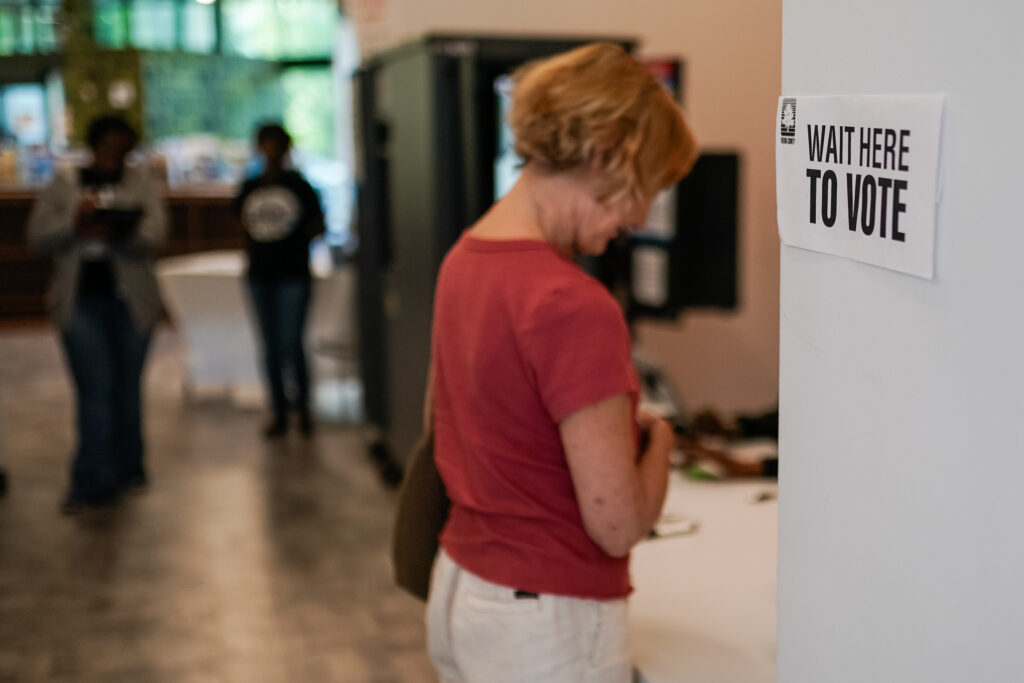
Just two days before Georgia’s crucial supreme court elections, a judicial watchdog group composed of GOP appointees accused two liberal candidates of violating conduct rules, in part for expressing their positions on abortion rights.
The two liberal candidates, Jen Jordan and Miracle Rankin, are running against opponents endorsed by the state’s GOP governor. Democrats are describing the move as “dirty work” aimed at improperly tarnishing the liberal candidates’ image ahead of the vote.
Who controls Georgia’s top court has major repercussions for democracy. Gov. Brian Kemp (R) recently called for a special session this summer to redraw state congressional maps and possibly reduce the number of majority-minority districts. Voting access issues are also likely to flare in the crucial swing state.
In a recent interview with the Georgia Recorder, Jordan said: “If people care about those issues and protecting the right to vote, or protecting the right to privacy, then they really need to pay attention to this election.”
Get updates straight to your inbox — for free
Join 350,000 readers who rely on our daily and weekly newsletters for the latest in voting, elections and democracy.
On Sunday, the Judicial Qualifications Commission of Georgia (JQCG) accused the candidates of violating state ethics rules after they appeared in a commercial together and spoke about abortion rights at campaign events.
“During her campaign for judicial office, one of Ms. Jordan’s campaign commercials, which circulated on television and social media, is a joint campaign advertisement with ShaMiracle Rankin, also a candidate in a nonpartisan judicial election for a seat on the Supreme Court of Georgia,” reads the JQCG wrote in its findings. “As the candidates appear together, Ms. Jordan informs viewers, ‘we’re running for Georgia Supreme Court to fight for what’s fair.’ Each candidate makes additional statements using the terms ‘we’ve’ or ‘we’ll’ (‘we’ll fight for you’).”
According to the commission, this violates Georgia’s Code of Judicial Conduct rules prohibiting “judicial candidates from publicly endorsing other candidates for public office.”
The findings were released by a special committee formed by the commission for this election, as happens every election year. The full commission will make a final determination on the matter later.
Jordan and Rankin had previously sued the commission, when alerted that they were under investigation, arguing that the probe violated their free speech rights. However, the 11th Circuit Court of Appeals rejected their complaint, which allowed the results of the commission’s findings to go public.
The JQCG’s ten members are appointed by the Supreme Court, the governor, and the legislature. All three have long been in Republican or conservative hands.
“These Supreme Court seats do not belong to Governors, they do not belong to political parties, they do not belong to unelected government agencies—they belong to the people of Georgia,” said the Democratic Party of Georgia in a statement. “While the incumbents use an insider government agency to do their dirty work, Georgia voters understand what’s at stake and are showing up in record numbers to elect pro-rights, pro-democracy justices in Jen Jordan and Miracle Rankin.”
The race has drawn national attention as Jordan and Rankin have gained endorsements from former President Barack Obama and former Vice President Kamala Harris. If they’re elected tomorrow, it would add two liberal-leaning voices to the almost exclusively Republican-leaning state supreme court bench.
They are running against two incumbents, Charlie Bethel, a former Republican state senator, and Sarah Warren, Georgia’s former solicitor general, both appointed by former Gov. Nathan Deal, a Republican. Both have also been endorsed by Kemp, whose leadership committee has donated funds to Bethel’s campaign.
Georgia Supreme Court judges are supposed to be nonpartisan, but eight of the nine current justices were appointed by Republican governors, and the remaining judge won his seat during the 2018 election, after being endorsed by then-Gov. Deal.