Court bashes internal DOJ legal memo that Trump admin used to justify voter roll grab
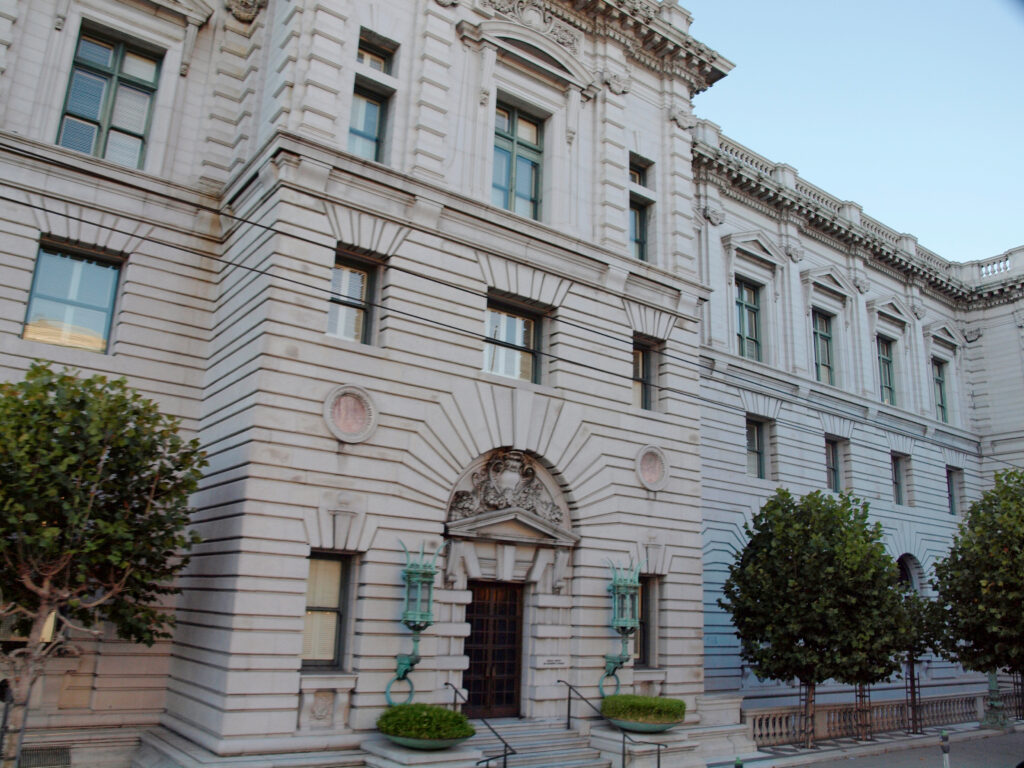
The U.S. Department of Justice (DOJ) appeared to hit another roadblock Tuesday in its unprecedented effort to obtain sensitive voter registration data from every state, as a panel of federal judges sounded deeply skeptical of the government’s argument for access to California and Oregon’s voter rolls.
Much of the judges’ questioning of DOJ’s voter roll grab was over a bizarre memo that the department’s Office of Legal Counsel (OLC) first submitted last week for a different lawsuit seeking Michigan’s unredacted voter registration data.
The memo claimed the department has the legal authority to demand sensitive voter data not because of some federal law, but because the DOJ said so.
Judges in the Michigan case last week didn’t get much of a chance to discuss the OLC memo filing during oral argument, since DOJ filed it the night before. But the memo was a major point of contention in DOJ’s argument Tuesday before a panel of three judges for the 9th U.S. Circuit Court of Appeals.
Judge Lucy Koh, a Biden appointee, used DOJ’s own words in the OLC memo against itself. The memo claimed that DOJ is only seeking state voter rolls to comply with President Donald Trump’s March 2025 executive order on elections that directs the Department of Homeland Security to use federal databases to check state voter rolls.
Get updates straight to your inbox — for free
Join 350,000 readers who rely on our daily and weekly newsletters for the latest in voting, elections and democracy.
“The executive order only says the Department of Homeland Security shall review each state’s publicly available voter registration list — it doesn’t say the unredacted,” Koh said. “So if you are basically trying to implement this executive order, why are you now seeking the unredacted [voter rolls]?”
The DOJ also argued states have to hand over their full voter rolls — which include sensitive personal information of every voter like social security numbers and dates of birth — hinged on a vague statute in the Civil Rights Act of 1960 (CRA) that requires local and state election officials to “retain and preserve” documents related to registration that “come into [their] possession,” and hand them over to the government upon request.
Federal judges in lower courts previously shut down this argument in both states. In January, a district court judge dismissed the department’s California lawsuit, warning that the government’s bid for the voter records “threatens the right to vote which is the cornerstone of American democracy.”
And a federal judge in Oregon similarly issued a sweeping rebuke of the Trump Administration’s push to seize state voter roll data.
The Trump administration appealed both rulings to the 9th Circuit, and the trio of judges who heard the government’s argument Tuesday seemed similarly wary of DOJ’s case.
So far, Trump’s DOJ is 0 for 6 in its legal battle to obtain state voter rolls.
DOJ lawyer Andrew Braniff wasn’t even able to get a full sentence out during Tuesday’s oral argument before judges launched into questions about the Trump administration’s voter roll grab during the Oregon hearing.
“Last summer, the Department of Justice requested from Oregon their statewide voter registration list based on the plain authority of the Civil Rights Act of 1960 in order to enforce the language of the National Voter Registration Act and the Help America Vote Act,” Braniff started off before he was quickly interrupted by Koh.
“If it was plain authority, why didn’t you cite it in your first demand letter?” Koh asked, referencing the first round of letters that DOJ sent to states last summer. In those letters, DOJ only cited two federal voting laws as the federal statutes it claimed required states to hand over their full voter rolls.
Koh also pushed back on DOJ’s argument that the CRA authorizes access to state voter rolls for purposes unrelated to investigating racially discriminatory voting practices, and without any evidence of wrongdoing.
“In 1960 they were dealing with particularized wrongdoing, they were having a specific pre-existing articulated enforcement concern, right?” she asked Braniff. “They were not saying ‘give me 365 million people’s worth of voting list, let me request it from all 50 states, let me sue 30 states.’ That wasn’t quite what was happening in 1960.”
Abha Khanna*, a lawyer with the Elias Law Group representing the NAACP — which intervened in the case to help fight DOJ’s voter roll grab — also pointed out the flaws in the government’s CRA claim.
“I think one problem that underlies all of this is that the government has had a really hard time keeping its story straight,” Khanna said. “The CRA that they now claim so obviously gives them the authority to seek these voter lists is not something they even recognized in their initial demands to the states, which cited only the NVRA and HAVA… and what we’ve learned in just the last week in that OLC memo is that actually there might have been some entirely new and undisclosed purpose about immigration enforcement that is not a purpose that was ever disclosed in the letter.”
David Goldman, another lawyer for DOJ who argued for the department in the California case, defended the OLC memo.
“What we did as a law enforcement agency is get guidance as to what to do if we find evidence of voter fraud in our investigation of [state voter rolls],” Goldman said. “It does not belie some sort of hidden motive that we’ve been keeping from the courts this whole time… and I stand by it today.”
*The Elias Law Group (ELG) is representing the intervenors in the DOJ voter roll case in California. ELG Firm Chair Marc Elias is the founder of Democracy Docket.